2026.02.01 (일) 03:40


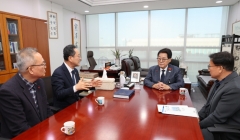
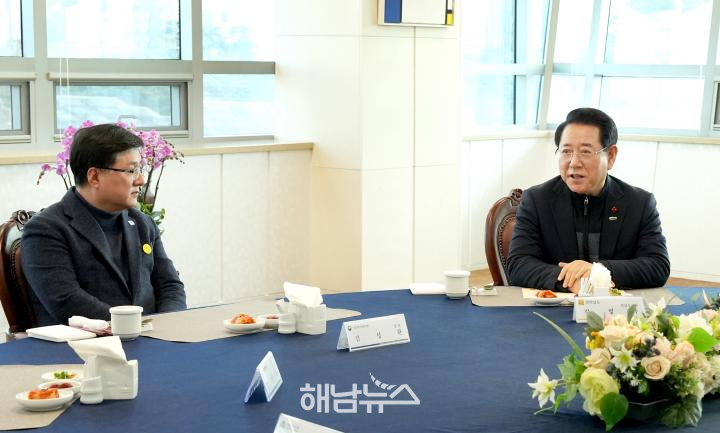 전남도-기후부장관 오찬간담회 / 사진제공=전라남도 |
전라남도가 대한민국 에너지 정책의 결정 구조 자체를 바꿔야 할 시점임을 정부에 분명히 밝혔다.
전라남도는 22일 나주 한국전력공사 본사에서 김성환 기후에너지환경부 장관과 오찬 간담회를 열고, 발전사업 인허가권 이양을 포함해 전남을 대한민국 에너지 신산업의 핵심 거점으로 육성하기 위한 주요 현안을 공식 건의했다.
이번 간담회는 김성환 장관 취임 이후 첫 호남 방문 일정으로 마련됐으며, 김영록 전남도지사를 비롯해 신정훈 국회의원, 김동철 한전 사장, 윤병태 나주시장, 박진호 한국에너지공대 총장대행 등 지역 에너지 생태계를 대표하는 주요 인사 15명이 참석했다.
김영록 지사는 이 자리에서 “전남은 재생에너지 잠재량, 에너지 산업 인프라, 연구·인력 기반을 모두 갖춘 대한민국 에너지 전환의 중심지”라며 “이제는 에너지를 생산하는 지역이 계획과 인허가, 책임까지 함께 지는 구조로 바뀌어야 한다.”고 강조했다.
특히 김 지사는 광주·전남 행정통합 추진과 연계해, 국무총리가 밝힌 행정통합 지원 인센티브가 에너지 분야 제도 개선으로 실질화 돼야 한다는 점을 분명히 했다. 이를 위해 에너지 분야 특별법에 필수 특례가 반영될 수 있도록 기후에너지환경부의 적극적인 역할을 요청했다.
전남도가 제시한 핵심 요구는 발전사업 인허가권의 지방 이양이다.
구체적으로는 태양광 50MW 이하, 해상풍력 100MW 이하 발전 사업에 대한 인허가 권한을 광주·전남 행정통합 특별시에 이양하고, 해상풍력 항만과 배후단지 조성 등 기반 인프라에 대한 국가 차원의 지원을 제도화해 줄 것을 건의했다.
아울러 분산에너지 특화단지 내에서 직접전력거래를 활성화할 수 있도록 관련 제도 정비도 함께 제안했다.
전남도는 재생에너지 확대의 최대 장애물로 지적돼 온 계통 포화 문제에 대해서도 단·중기 해법을 제시했다.
단기 과제로는 에너지저장장치(ESS)의 대폭 확대, 한전의 허수 사업자 정비, 노후 송전선로의 신속한 교체를 통해 계통 여유를 확보해야 한다고 강조했다.
중·장기 과제로는 서해안 초고압직류송전(HVDC) 구축 시기의 조기화와 함께, 분산에너지 특화단지 내 송·배전 설비 구축에 대한 국비 지원 확대를 정부에 요청했다.
김영록 지사는 “전남은 이미 준비돼 있다.”며 “이번 간담회에서 논의된 사안들이 선언에 그치지 않고, 국가 정책과 제도 개선으로 이어질 수 있도록 기후부와 한전이 함께 책임 있게 나서주길 기대한다.”고 말했다.
한편 전남도는 이번 건의를 계기로, 에너지 생산–산업–연구–행정 권한이 하나로 묶이는 ‘에너지 수도 전남’ 구상을 본격화한다는 방침이다.
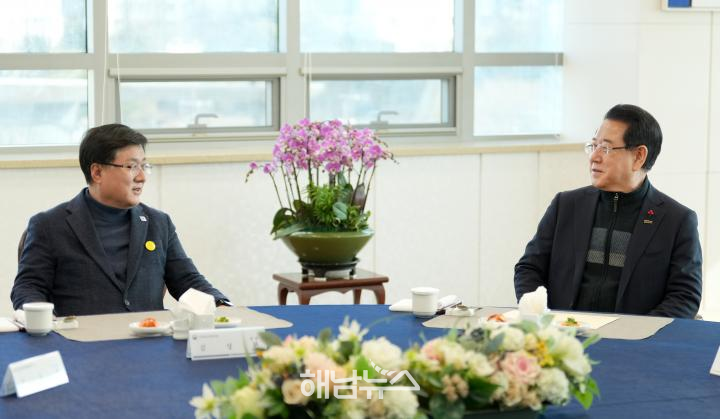 전남도-기후부장관 오찬간담회 / 사진제공=전라남도 |
[Jeonnam = Haenam News] haenamnews@kakao.com
“Energy Is Produced in Jeonnam—So Why Are Decisions Made in Seoul?”
Jeonnam Province Formally Calls for the Transfer of Power Generation Permitting Authority
— Governor Kim Young-rok Urges Reflection of Energy New Industry and Administrative Integration Special Provisions —
Jeonnam Province has made it clear to the central government that the time has come to fundamentally change the decision-making structure of South Korea’s energy policy.
On the 22nd, Jeonnam Province held a luncheon meeting with Minister Kim Sung-hwan of the Ministry of Climate, Energy and Environment at the headquarters of Korea Electric Power Corporation (KEPCO) in Naju, where it formally presented key policy proposals. These included the transfer of permitting authority for power generation projects, aimed at fostering Jeonnam as a core hub of the nation’s energy new industries.
The meeting was organized as part of Minister Kim Sung-hwan’s first official visit to the Honam region since taking office. About 15 leading figures from the regional energy ecosystem attended, including Jeonnam Governor Kim Young-rok, National Assembly member Shin Jung-hoon, KEPCO President Kim Dong-cheol, Naju Mayor Yoon Byung-tae, and Acting President Park Jin-ho of Korea Institute of Energy Technology.
At the meeting, Governor Kim emphasized that Jeonnam is the center of Korea’s energy transition, equipped with abundant renewable energy potential, robust energy industry infrastructure, and strong research and human resource foundations.
“Now is the time to move toward a structure in which the regions that produce energy also take responsibility for planning, permitting, and accountability,” he said.
Governor Kim further stressed that, in connection with the 추진 of Gwangju–Jeonnam administrative integration, the incentives announced by the Prime Minister must be translated into tangible institutional reforms in the energy sector. To that end, he requested the active involvement of the Ministry of Climate, Energy and Environment to ensure that essential special provisions are reflected in a dedicated energy-sector special law.
The core demand presented by Jeonnam Province is the decentralization of permitting authority for power generation projects. Specifically, the province proposed transferring permitting authority for solar power projects of up to 50 MW and offshore wind projects of up to 100 MW to the integrated Gwangju–Jeonnam special metropolitan government. It also called for the institutionalization of state-level support for key infrastructure, such as ports and hinterland complexes for offshore wind power.
In addition, Jeonnam suggested regulatory reforms to promote direct power trading within distributed energy special zones.
Jeonnam Province also outlined short- and mid- to long-term solutions to the grid congestion problem, which has been cited as the biggest obstacle to expanding renewable energy.
As short-term measures, the province emphasized the large-scale expansion of energy storage systems (ESS), the cleanup of speculative or non-performing project holders within KEPCO’s system, and the rapid replacement of aging transmission lines to secure additional grid capacity.
As mid- to long-term measures, Jeonnam requested the acceleration of the construction timeline for the West Coast high-voltage direct current (HVDC) transmission network, as well as expanded national funding for transmission and distribution facilities within distributed energy special zones.
Governor Kim stated, “Jeonnam is already prepared,” adding, “I hope the issues discussed at this meeting will not remain mere declarations, but will lead to concrete national policies and institutional reforms, with the Ministry and KEPCO working together in a responsible manner.”
Meanwhile, Jeonnam Province plans to use this policy proposal as a turning point to fully advance its vision of “Energy Capital Jeonnam,” where energy production, industry, research, and administrative authority are integrated into a single, cohesive system.
 해남뉴스 박충배 편집 및 논설위원 haenamnews@kakao.com