| “AI 없이는 바다도 미래 없다” 전남 수산업, 1천849억 투입해 ‘스마트 양식 대전환’ 시동 해남뉴스 박충배 편집 및 논설위원 haenamnews@kakao.com |
| 2026년 01월 29일(목) 10:00 |
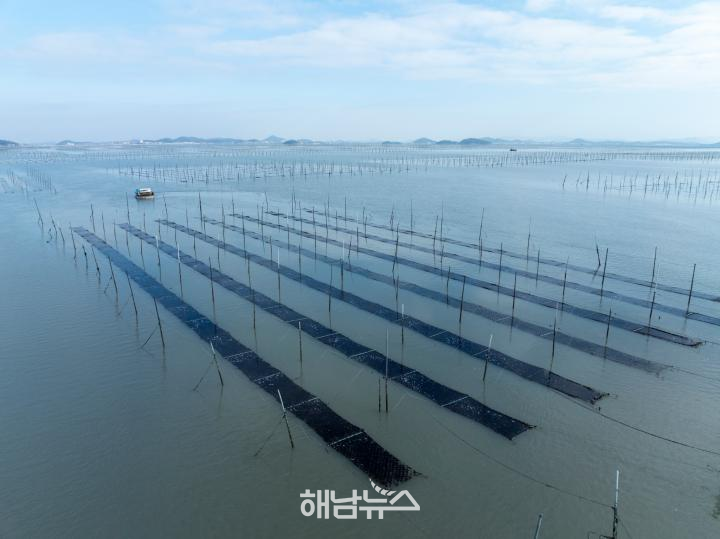 지주식 김양식장 전경 / 사진제공=전라남도 |
AI·기후·안전·소득까지… 전남, 수산업 구조 자체를 다시 짠다.
전라남도가 인공지능(AI)과 스마트 양식기술을 앞세워 전통 수산업의 구조를 근본적으로 전환하는 대규모 정책에 착수했다.
기후위기와 생산 과잉, 고령화, 안전사고 등 복합 위기에 직면한 수산업을 더 이상 ‘경험 산업’에 맡겨둘 수 없다는 판단이다.
전남도는 총 1천849억 원을 투입해 5대 분야 78개 사업을 추진, AI·스마트 기술을 기반으로 한 수산업 전면 개편에 나선다고 밝혔다.
이번 계획은 단순 지원사업을 넘어 수산업 생산·관리·유통·안전·소득 구조 전반을 다시 설계하는 ‘전환 정책’이라는 점에서 의미가 크다.
■ AI·스마트 양식, 전남 수산업의 새 표준으로
전남도는 우선 기후변화 대응 AI·스마트 양식업 육성을 핵심 축으로 설정했다.
스마트 종자 생산시설과 글로벌 참조기 양식산업 클러스터 조성, 자동화 양식 장비와 전복 디지털 선별기 보급 등에 213억 원을 투입한다.
이는 새 정부의 AI·스마트 산업 육성 기조에 맞춰, 전남을 ‘스마트 수산업 국가 거점’으로 끌어올리기 위한 전략적 투자다.
■ 이상 수온·재해 대응… “피해 후 복구에서 예방 중심으로”
기후위기 대응도 강화된다.
전남도는 358억 원을 들여 벤자리 등 이상 수온에 강한 양식 품종 전환을 유도하고, 양식장 산소공급기 등 재해대응 장비를 확대 보급한다.
기후 변화에 따른 어업 피해를 ‘사후 지원’이 아닌 사전 예방 체계로 전환하겠다는 방침이다.
■ 전복 산업, 과잉에서 구조개편으로
전남 대표 양식 품종인 전복 산업도 전환기에 들어선다.
전남도는 올해를 ‘전복 산업 대전환 원년’으로 선포하고, 가두리 감축과 가공제품 생산 지원 등 50억 원 규모 구조개편에 나선다.
생산량 중심의 정책에서 벗어나 수급 조절·가공·유통을 아우르는 산업 체질 개선이 목표다.
■ 연근해 어업·안전관리도 ‘현장 중심’ 재설계
연근해 어업의 지속가능성을 위해 80억 원을 투입해 어선 집중 감척을 추진하고, 총허용어획량(TAC) 참여 어업인에 대한 규제 완화 등 제도 개선도 병행한다.
어업 현장의 최대 위험요소인 안전사고 예방을 위해서는 83억 원을 들여 노후 어선 기관 대체, 안전·소방·항해 장비 보급, 소형선박 화재감지기 시스템을 지원한다.
사고 이후 책임을 묻는 방식이 아닌, 사전 예방형 안전관리 체계로의 전환이다.
■ 어촌 기본소득 보전… “소득이 있어야 바다가 지켜진다.”
전남도는 새 정부의 농어촌 기본소득 정책과 연계해 488억 원 규모의 예산으로 도서지역 어업인과 소규모 경영 어업인, 어선원의 기본소득을 보전한다.
어업인 안전보험료 지원과 항·포구 맞춤형 인양기·부잔교 설치 등을 통해 안정적인 어업 활동 여건도 함께 마련한다.
■ 수산자원 회복·블루카본까지… 친환경 바다로
수산자원 생태 회복과 친환경 생산기반 구축에도 577억 원이 투입된다.
해역별 특화 수산종자 방류, 인공어초 설치, 바다숲 조성, 친환경 에너지 장비 보급과 함께 블루카본 기반 조성에도 힘을 쏟는다.
■ ‘스마트수산업 혁신 선도지구’ 선정… 전남이 주도한다.
전남은 해양수산부 ‘스마트수산업 혁신 선도 지구’ 공모에 선정되며, 국가 스마트 수산업 전환의 핵심 거점으로 공식화됐다.
선도 지구 조성을 위해 2030년까지 총 1천900억 원이 추가 투입될 예정이다.
전창우 전남도 친환경수산과장은 “AI와 스마트 기술을 기반으로 수산업의 구조 혁신을 이끌고, 현장의 목소리를 정책에 적극 반영해 경쟁력 있는 어촌사회를 만들어가겠다.”고 밝혔다.
[Jeonnam = Haenam News] haenamnews@kakao.com
**“No AI, No Future for the Sea”
Jeonnam Province Launches KRW 184.9 Billion Smart Aquaculture Transformation**
AI, Climate, Safety, and Income — Jeonnam Redesigns the Entire Fisheries Structure
Jeonnam Province has launched a large-scale policy initiative to fundamentally transform its traditional fisheries industry by introducing artificial intelligence (AI) and smart aquaculture technologies.
Faced with compounded crises including climate change, overproduction, an aging workforce, and frequent safety accidents, the province determined that the fisheries sector can no longer rely solely on experience-based practices.
Jeonnam Province announced that it will invest a total of KRW 184.9 billion to implement 78 projects across five key sectors, ushering in a comprehensive overhaul of the fisheries industry based on AI and smart technologies.
This plan goes beyond conventional subsidy programs and represents a structural transition policy that redesigns the entire fisheries value chain — from production and management to distribution, safety, and income stability.
■ AI-Driven Smart Aquaculture Becomes the New Standard
Jeonnam Province has designated AI-based smart aquaculture development for climate change adaptation as its core policy pillar.
An investment of KRW 21.3 billion will support the establishment of smart seed production facilities, the creation of a global yellow croaker aquaculture cluster, and the deployment of automated aquaculture equipment and digital abalone sorting systems.
This strategic investment aligns with the national government’s AI and smart industry promotion agenda and aims to elevate Jeonnam into a national hub for smart fisheries innovation.
■ Climate Disaster Response: From Recovery to Prevention
Climate resilience measures will also be significantly strengthened.
With KRW 35.8 billion, the province will promote the transition to aquaculture species resilient to abnormal water temperatures, such as benbari, and expand the distribution of disaster-response equipment including oxygen supply systems for fish farms.
The policy marks a clear shift from post-damage compensation toward a preventive, risk-management-oriented fisheries system.
■ Abalone Industry Reform: From Overproduction to Structural Renewal
The abalone industry, one of Jeonnam’s signature aquaculture sectors, is entering a major transition phase.
Jeonnam Province has declared this year the “First Year of Abalone Industry Transformation” and will invest KRW 5 billion to reduce offshore cage density and support the production of value-added processed products.
The goal is to move away from volume-driven growth toward a balanced industrial structure integrating supply control, processing, and distribution.
■ Coastal Fisheries and Safety Management Rebuilt Around the Field
To ensure the sustainability of coastal fisheries, KRW 8 billion will be invested in the targeted decommissioning of fishing vessels, alongside institutional reforms such as regulatory easing for Total Allowable Catch (TAC) participants.
To prevent safety accidents — the greatest on-site risk — KRW 8.3 billion will be allocated to replacing aging vessel engines, supplying essential life-saving, firefighting, and navigation equipment, and installing fire detection systems for small vessels.
The focus shifts from assigning responsibility after accidents to a preemptive safety management system.
■ Securing Basic Income for Fishing Communities: “Income Sustains the Sea”
In coordination with the national rural basic income policy, Jeonnam Province will allocate KRW 48.8 billion to secure basic income for island-area fishers, small-scale operators, and fishing crew members.
The program also includes support for fisheries safety insurance premiums and the installation of customized hoisting equipment and floating piers at ports, creating a more stable working environment for fishermen.
■ Marine Ecosystem Recovery and Blue Carbon Expansion
An additional KRW 57.7 billion will be invested in restoring marine ecosystems and expanding eco-friendly fisheries infrastructure.
Projects include releasing region-specific fish fry, installing artificial reefs, expanding marine forests, supporting eco-friendly energy equipment, and building blue carbon ecosystems.
■ Selected as a National Smart Fisheries Innovation Zone
Jeonnam Province has been officially selected for the Ministry of Oceans and Fisheries’ Smart Fisheries Innovation Leading Zone, solidifying its position as a national center for smart fisheries transformation.
To develop the zone, an additional KRW 190 billion will be invested by 2030, advancing AI-based aquaculture management, eco-friendly seafood production, and fisheries data-driven industries.
Jeon Chang-woo, Director of the Eco-Friendly Fisheries Division of Jeonnam Province, stated,
“By driving structural innovation in fisheries through AI and smart technologies and actively reflecting the voices from the field, we aim to build competitive and sustainable fishing communities.”
 해남뉴스 박충배 편집 및 논설위원 haenamnews@kakao.com