| 수도권 김장은 앞당겨지는데, 전남 배추는 왜 늦는가. 해남 가을배추, 김치산업 구조개편 없이는 길을 잃는다. 해남뉴스 박충배 편집 및 논설위원 haenamnews@kakao.com |
| 2026년 01월 28일(수) 13:25 |
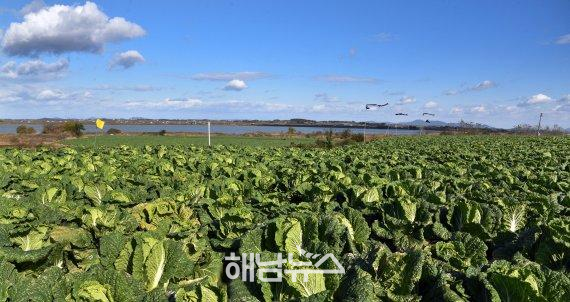 해남 가을 배추 밭 전경 / 사진제공=해남뉴스 |
【사설】
김장의 시계는 이미 빨라졌다.
기상청은 김장 적정 시기를 11월 중순까지로 제시했고, 실제로 김장 가구의 43%가 11월 이전에 김장을 마친다는 조사 결과도 나와 있다. 수도권을 중심으로 김장은 더 이상 ‘초겨울 풍경’이 아니다.
기후 변화와 생활 방식의 변화가 김장 일정을 앞당기고 있다.
그러나 전남, 특히 해남의 가을배추 출하 구조는 여전히 과거에 머물러 있다.
강원도 배추가 9~10월에 본격 출하되는 반면, 해남 가을배추는 10월 말부터 12월 사이에 집중된다. 김장이 이미 끝나가는 시점에 물량이 쏟아지는 구조다.
이는 가격 불안, 판로 축소, 산지 적체로 직결된다.
“배추는 잘 자랐는데 팔 곳이 없다”는 말이 반복되는 이유다.
이 간극은 단순한 출하시기의 문제가 아니다.
품종, 가공, 산업 구조 전반의 문제다.
농업기술원과 지자체가 지금 가장 시급하게 나서야 할 과제는 명확하다.
출하시기를 앞당길 수 있는 품종 개발과 실증, 그리고 김장 수요 변화에 맞춘 전략적 재배 체계 전환이다.
기후가 바뀌고 소비가 바뀌었는데, 생산 구조만 그대로라면 농업은 늘 시장 뒤에 서게 된다.
더 근본적인 문제는 전남 김치산업의 구조적 한계다.
전남연구원에 따르면 전남 도내 김치류 제조업체는 325개, 전국의 16.4%로 가장 많다.
경기(324개), 광주(169개)를 앞선다.
숫자만 보면 ‘김치의 본산’이다.
그러나 2024년 기준 김치류 판매액 비중은 전남이 7.0%, 전국 4위에 그친다.
경기(23.2%), 충북(17.6%), 강원(16.7%)에 한참 못 미친다.
이 괴리는 무엇을 말하는가.
전남의 김치산업은 명성은 있으나 산업은 약하다는 냉정한 현실이다. 다수의 업체가 영세 가공업체에 머물러 있고, 제품 기획·브랜드·유통·수출이 분절돼 있다.
원물은 풍부하지만, 부가가치를 만드는 힘이 부족하다.
윤영석 전남연구원 부연구위원의 지적은 정확하다.
김치산업은 더 이상 ‘만드는 산업’에 머물러서는 안 된다.
산업단체를 중심으로 제품 기획, 브랜드 전략, 유통과 수출이 유기적으로 연결되는 ‘시장 주도형 지속 가능 산업’으로 도약해야 한다.
여기에 지자체 차원의 푸드테크 인프라 구축, 데이터 기반 품질관리, 가공·저장·유통 기술 지원이 결합돼야 한다.
특히 해남은 선택의 기로에 서 있다.
배추 산지로서의 위상에 안주할 것인가, 아니면 김치 산업의 전주기 거점으로 도약할 것인가. 답은 분명하다.
해남 배추가 제값을 받으려면, 해남 안에서 가공·브랜드·문화·수출이 함께 만들어져야 한다.
김치를 단순한 식품이 아니라 감각적·문화적 정체성을 가진 상업 브랜드로 구체화하는 전략이 필요하다.
김장은 이미 앞당겨졌다.
시장은 변했고, 소비는 움직였다.
이제 변해야 할 것은 전남의 생산·가공·산업 전략이다.
그 변화의 출발점이 해남이 되어야 한다.
그렇지 않다면, 해남의 배추는 앞으로도 “잘 키웠지만 늦은 작물”로 남게 될 것이다.
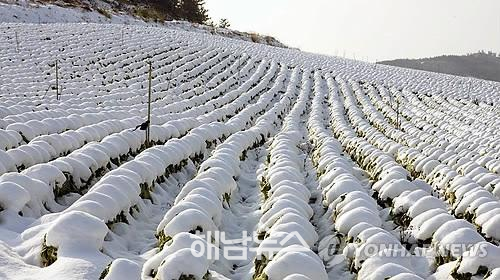 해남 겨울 배추 밭/ 사진제공=해남뉴스 |
[Haenam = Haenam News] haenamnews@kakao.com
[Editorial]
Kimchi-Making in the Capital Region Is Moving Earlier—So Why Is Jeonnam Cabbage Still Late?
Without Structural Reform, Haenam’s Autumn Cabbage and Kimchi Industry Will Lose Its Way
The clock for kimchi-making has already moved forward.
The Korea Meteorological Administration has announced that the optimal period for kimjang now runs only until mid-November, and surveys show that 43% of households complete kimchi-making before November. Centered on the capital region, kimjang is no longer a “late-autumn ritual.” Climate change and shifts in lifestyle have clearly accelerated the schedule.
Yet Jeonnam—especially Haenam’s autumn cabbage shipping structure—remains stuck in the past.
While Gangwon Province cabbage is shipped in earnest from September to October, Haenam’s autumn cabbage is concentrated between late October and December. In other words, large volumes hit the market after kimjang season has already ended.
The result is predictable: price instability, shrinking sales channels, and stockpiles piling up at production sites.
“This cabbage grew well, but there’s nowhere to sell it” has become a familiar refrain.
This gap is not merely a problem of shipping timing.
It is a problem of varieties, processing, and the overall industrial structure.
What agricultural research institutes and local governments must urgently address is clear:
the development and field verification of varieties that allow earlier shipment, and a strategic shift in cultivation systems aligned with changing kimjang demand. When the climate changes and consumption patterns change, but production structures do not, agriculture is inevitably left trailing the market.
At a deeper level lies the structural limitation of Jeonnam’s kimchi industry itself.
According to the Jeonnam Research Institute, the province has 325 kimchi manufacturers, accounting for 16.4% of the national total, the highest in the country—more than Gyeonggi (324) and Gwangju (169). By numbers alone, Jeonnam appears to be the “home of kimchi.”
However, in terms of sales, the reality is starkly different.
As of 2024, Jeonnam’s share of kimchi sales stands at 7.0%, ranking fourth nationwide, far behind Gyeonggi (23.2%), Chungbuk (17.6%), and Gangwon (16.7%).
What does this disparity tell us?
It reveals a hard truth: Jeonnam’s kimchi industry has prestige, but not power. Most producers remain small-scale processors, with product planning, branding, distribution, and exports fragmented and disconnected. Raw materials are abundant, but the capacity to generate added value is weak.
The assessment by Yoon Young-seok, Senior Research Fellow at the Jeonnam Research Institute, is spot on.
The kimchi industry can no longer remain simply an industry that “makes” kimchi. It must evolve into a market-driven, sustainable growth industry, where product planning, branding strategies, distribution, and exports are organically linked through industry organizations.
This transformation must be accompanied by local government-led food-tech infrastructure, data-based quality management, and technological support for processing, storage, and logistics.
Haenam, in particular, now stands at a crossroads.
Will it remain content with its status as a cabbage-producing region, or will it leap forward as a full-cycle hub of the kimchi industry? The answer is clear. For Haenam cabbage to receive fair value, processing, branding, culture, and exports must all be created within Haenam itself. Kimchi must be positioned not merely as food, but as a commercial brand with sensory and cultural identity.
Kimjang has already moved earlier.
The market has changed, and consumption has shifted.
What must now change is Jeonnam’s strategy for production, processing, and industry.
That change should begin in Haenam.
Otherwise, Haenam’s cabbage will continue to be remembered as a crop that was “well grown, but too late.”
 해남뉴스 박충배 편집 및 논설위원 haenamnews@kakao.com