| “쌀농사 흔들리면 식량안보도 흔들린다” 전남도, 벼 경영안정대책비 114억 원 추경 재반영…감액 철회 전격 결정 해남뉴스 박충배 편집 및 논설위원 haenamnews@kakao.com |
| 2026년 01월 22일(목) 10:51 |
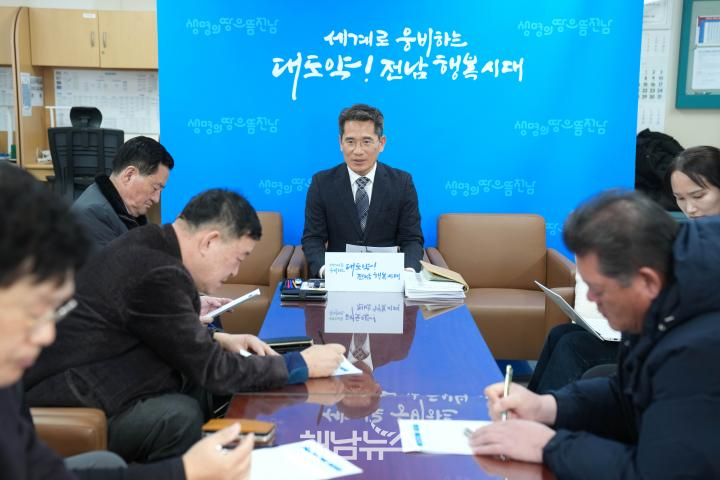 벼 경영안전대책비 관련 기자간담회1 / 사진제공=전라남도 |
전라남도가 한 차례 감액했던 벼 경영안정대책비를 다시 살려내며 쌀 재배농가 보호에 나섰다.
농업경영비 급등이라는 현실 앞에서, ‘농가 책임 전가’ 논란을 불러왔던 감액 결정을 사실상 되돌린 것이다.
전라남도는 21일 도의회와 농업인단체 등과의 협의를 거쳐, 2025년 정리추경에서 도비 50%를 감액했던 벼 경영안정대책비 114억 원 전액을 2026년 추가경정예산에 다시 반영해 지원하겠다고 밝혔다.
이번 결정은 농기계 가격, 비료비, 인건비 등 농업경영비 전반의 급격한 상승으로 벼 재배농가의 경영 부담이 임계점에 도달했다는 현장의 판단이 반영된 결과다.
벼 경영안정대책비는 쌀 관세화 유예(2004~2014년), 추곡수매제도 폐지(2005년) 등 급변한 농정 환경 속에서 쌀값 하락과 정책 변화로 인한 농가 손실을 보전하기 위해 도입된 전남도의 핵심 농정 제도다.
전남도는 2001년부터 2025년까지 총 1조 1,465억 원을 벼 재배농가에 직불금 형태 등으로 지원해 왔다.
그동안 전남도와 도의회는 ‘양곡관리법’ 개정과 ‘필수농자재법’ 제정 등으로 국가 차원의 쌀값 안정 및 농가 경영안정 장치가 강화된 점을 근거로, 벼 경영안정대책비 일부를 농어민 공익수당으로 전환했다.
이에 따라 올해부터 농어민 공익수당은 농가당 연 60만 원에서 70만 원으로 상향됐다.
그러나 제도는 만들어졌지만 현장은 아직 버틸 여력이 없다는 것이 문제였다.
법·제도가 완전히 안착되기 전까지는 쌀 재배농가가 고스란히 비용 상승을 떠안아야 하는 구조가 지속되면서, 농업인단체를 중심으로 “벼 경영안정대책비 감액은 시기상조”라는 요구가 거세졌다.
전남도는 이 같은 현실을 받아들여 필수농자재법과 양곡관리법이 본격 시행되기 전까지는 벼 경영안정대책비를 기존과 동일하게 지원하기로 방향을 수정했다.
아울러 전남도는 농정 환경 변화에 따라 농어촌 기본소득, 농어민 공익수당 등 각종 현금성 지원 정책에 막대한 재정 소요가 예상되는 만큼, 도의회·농업인단체와 함께 현금성 지원사업 전반에 대한 합리적 재조정 논의도 지속해 나갈 방침이다.
이에 대해 농업인단체 역시 전남도의 입장을 수용하며, 농업인 삶의 질 향상과 소득 안정을 위해 단계적이고 지속적인 제도 개선에 공동으로 노력하기로 뜻을 모았다.
유덕규 전남도 농축산식품국장은 “벼 농가를 포함한 모든 농업인의 삶이 더 나아지도록 하는 것이 농정의 최종 목표”라며, “앞으로도 현장의 목소리를 정책에 적극 반영해 지속가능한 농업 지원체계를 만들어가겠다”고 강조했다.
이번 추경 반영은 단순한 예산 복원이 아니다.
쌀농업을 ‘과거 산업’이 아닌 국가 식량안보의 최전선으로 다시 인식하겠다는 정책 신호이자, 전남 농정이 다시 현장으로 돌아왔다는 선언이다.
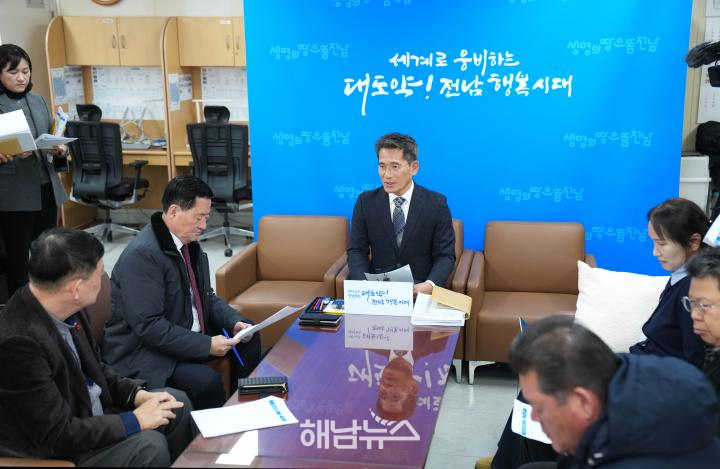 벼 경영안전대책비 관련 기자간담회1 / 사진제공=전라남도 |
[Jeonnam = Haenam News] haenamnews@kakao.com
“If Rice Farming Shakes, Food Security Shakes with It”
Jeonnam Province Restores KRW 11.4 Billion in Rice Farm Stability Funds in Supplementary Budget—Reverses Earlier Cut
Jeollanam-do has stepped in to protect rice farmers by restoring funding that had previously been reduced under the rice farm management stability program.
Facing a sharp surge in farming costs, the province has effectively reversed a budget cut that had drawn criticism for shifting the burden onto farmers.
On the 21st, Jeollanam-do announced that, following consultations with the provincial council and farmers’ organizations, it will reinstate the full KRW 11.4 billion for the rice farm management stability program—half of which had been cut in the 2025 year-end supplementary budget—by including it again in the 2026 supplementary budget.
The decision reflects on-the-ground assessments that soaring costs for agricultural machinery, fertilizers, and labor have pushed the management burden on rice farmers to a critical threshold.
The rice farm management stability program is a cornerstone agricultural policy of Jeonnam, introduced to compensate farmers for losses stemming from falling rice prices and policy shifts amid rapid changes such as the tariff-rate quota moratorium on rice (2004–2014) and the abolition of the government rice procurement system (2005).
From 2001 through 2025, Jeonnam Province provided a total of KRW 1.1465 trillion to rice-growing households, primarily in the form of direct payments.
In recent years, Jeonnam Province and the provincial council redirected a portion of the program to the Public Interest Allowance for Farmers, citing strengthened national frameworks for rice price stabilization and farm income security following amendments to the Grain Management Act and the enactment of the Essential Agricultural Inputs Act. As a result, the annual public interest allowance per farm was increased from KRW 600,000 to KRW 700,000 starting this year.
However, while the制度 have been put in place, farmers on the ground have yet to gain sufficient breathing room. Until the new laws and systems fully take root, rice growers have continued to shoulder rising costs, fueling growing calls from farmers’ groups that cutting the rice stability funds was premature.
Acknowledging this reality, Jeonnam Province revised its course, deciding to maintain rice farm management stability payments at existing levels until the Essential Agricultural Inputs Act and the Grain Management Act are fully implemented.
The province also noted that shifting agricultural policy environments are likely to generate substantial fiscal demands from various cash-based support programs, including a rural basic income and the Public Interest Allowance for Farmers. Accordingly, Jeonnam plans to continue discussions with the provincial council and farmers’ organizations to rationally recalibrate cash-support programs across the board.
Farmers’ groups have accepted the province’s position and agreed to work together toward gradual, sustained institutional improvements aimed at enhancing farmers’ quality of life and income stability.
Yoo Deok-gyu, Director General of Jeonnam’s Agriculture, Livestock, and Food Bureau, emphasized, “The ultimate goal of agricultural policy is to improve the lives of all farmers, including rice growers,” adding, “We will continue to actively reflect voices from the field and build a sustainable support system for agriculture.”
This supplementary budget restoration is more than a simple reinstatement of funds. It is a policy signal that repositions rice farming not as an industry of the past, but as a frontline pillar of national food security—and a declaration that Jeonnam’s agricultural policy has returned to the field.
 해남뉴스 박충배 편집 및 논설위원 haenamnews@kakao.com